

What Is Ceremonial Grade Matcha? (And What It Really Means)
The short version
"Ceremonial grade" is an informal, unregulated term for matcha meant to be whisked with water and drunk on its own. It is not a legal standard. What actually decides quality is origin, harvest, and cultivar, plus a vivid green color and a smooth, low-bitterness taste.
Walk down any matcha aisle, real or digital, and you will see two words on almost every tin: ceremonial grade. It is on the $15 supermarket bag and the $50 imported one. So what does it actually mean, and how do you tell real quality from a label?
This guide covers what "ceremonial grade matcha" means, how it differs from culinary grade, whether the term is even real, and a practical way to judge quality before you buy.
What does "ceremonial grade matcha" mean?
The "ceremonial grade matcha" meaning is simple: it is a marketing and quality descriptor for matcha smooth enough to drink on its own, not a regulated or legally defined grade. No agency certifies it. Any brand can print it on any pouch.
That does not mean quality is fake, the gap between great and bad matcha is enormous. It just means the words on the front are not the proof. What actually makes matcha high quality is concrete: a first harvest (young spring leaves), shade-grown plants, stone-ground powder, a vivid green color, and a named origin and cultivar. Those are the things "ceremonial grade" is supposed to imply but rarely guarantees.
Ceremonial grade vs. culinary grade matcha
The real difference between ceremonial grade and culinary grade matcha is intended use: ceremonial is made to drink straight, culinary is made to mix. Neither term is regulated, but the distinction carries some genuine meaning.
Ceremonial grade
Drunk on its own with just water. Usually a first harvest and a good cultivar, smooth, sweet, umami, vivid green. No sweetener needed. Higher price.
Culinary grade
Made for mixing, lattes, smoothies, baking. Usually a later harvest, more bitter and astringent, built to cut through milk and sugar. Cheaper.
The catch: a "culinary" bag from a great producer can beat a "ceremonial" bag from a bad one. Use the term as a rough signal of intent, not a guarantee.
Is "ceremonial grade" actually real?
Honestly? "Ceremonial grade" is not a real, regulated standard, and a lot of skeptics (a top Reddit thread among them) are right to call it marketing. In Japan, matcha is not sorted into tidy "ceremonial" and "culinary" buckets; it is judged by where it is grown, when it is picked, and how it is processed.
So the term itself is loose. But the quality it gestures at is very real, you just have to verify it yourself instead of trusting the front of the bag. That is the honest takeaway: ignore the badge, check the substance. The next two sections show you how.
How to tell if matcha is high quality
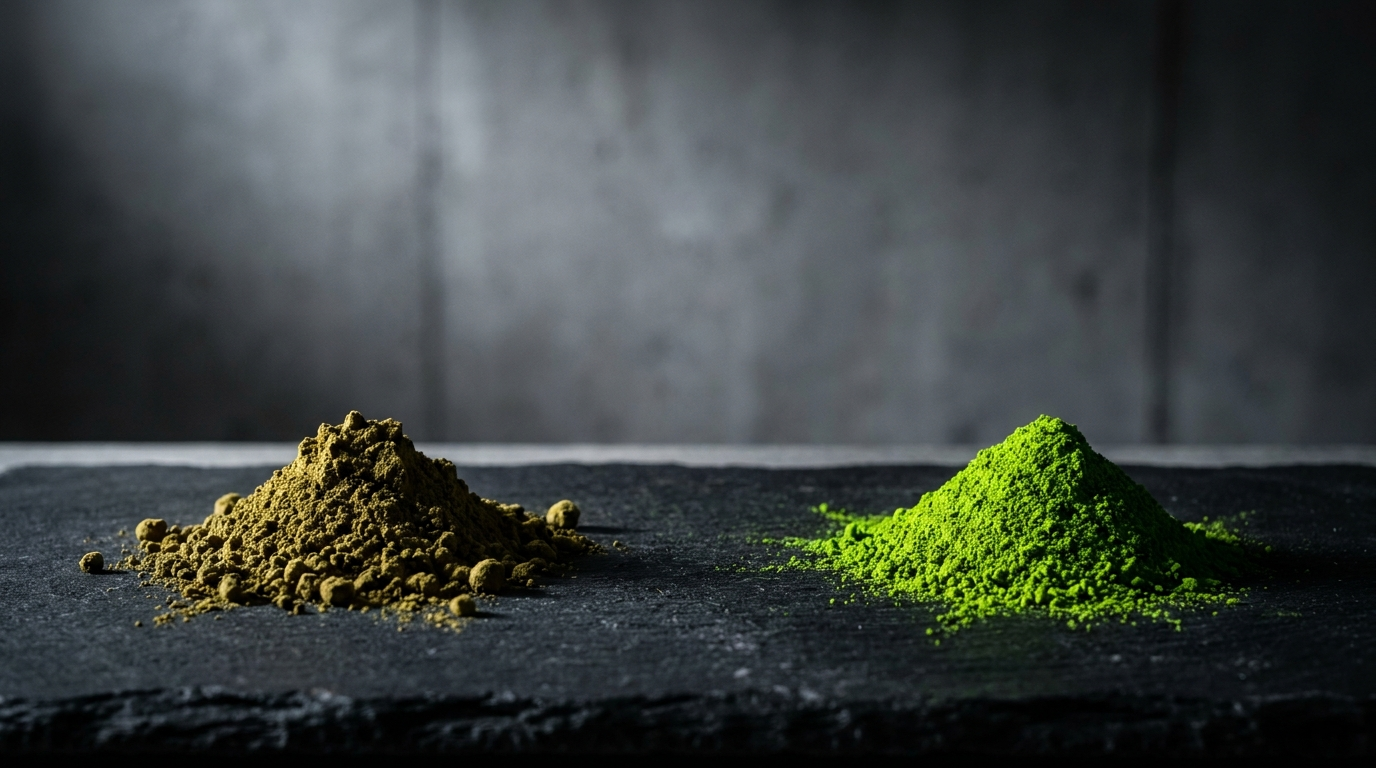
To tell if matcha is high quality, read the label like a skeptic and look at the powder. Here is a fast checklist.
- ✓Color. Vivid, almost electric green = good. Dull, yellow, or olive = lower quality, later harvest, or age.
- ✓Origin. A named region (Uji, Nishio, Yame, Kagoshima) = good. Vague "product of Japan" = skip.
- ✓Harvest. "First harvest" / ichibancha = good. Silence = assume later harvest.
- ✓Cultivar. A named variety (Samidori, Okumidori) = good. "Blend" or nothing = a blend.
- ✓Ingredients. One thing: matcha. No sugar, fillers, or "natural flavors."
- ✓Taste & texture. Smooth, fine, slightly sweet, umami. Harsh, chalky, or sweetener-needed = cheap leaf.
What makes a great ceremonial matcha (cultivar matters)
The best ceremonial grade matcha comes down to the cultivar, the specific variety of tea plant, more than the words on the label. A named, single cultivar is one of the clearest signs of real quality.
Samidori, for example, is a cultivar grown in Uji and prized for exactly the traits you want in matcha you drink on its own: rich umami, natural sweetness, and low bitterness. A single named cultivar from a named place is a fundamentally different product than an anonymous blend. Our first-harvest Samidori matcha is single-cultivar from Uji for exactly that reason, origin, harvest, and variety, all named, all on purpose.
How to prepare ceremonial matcha
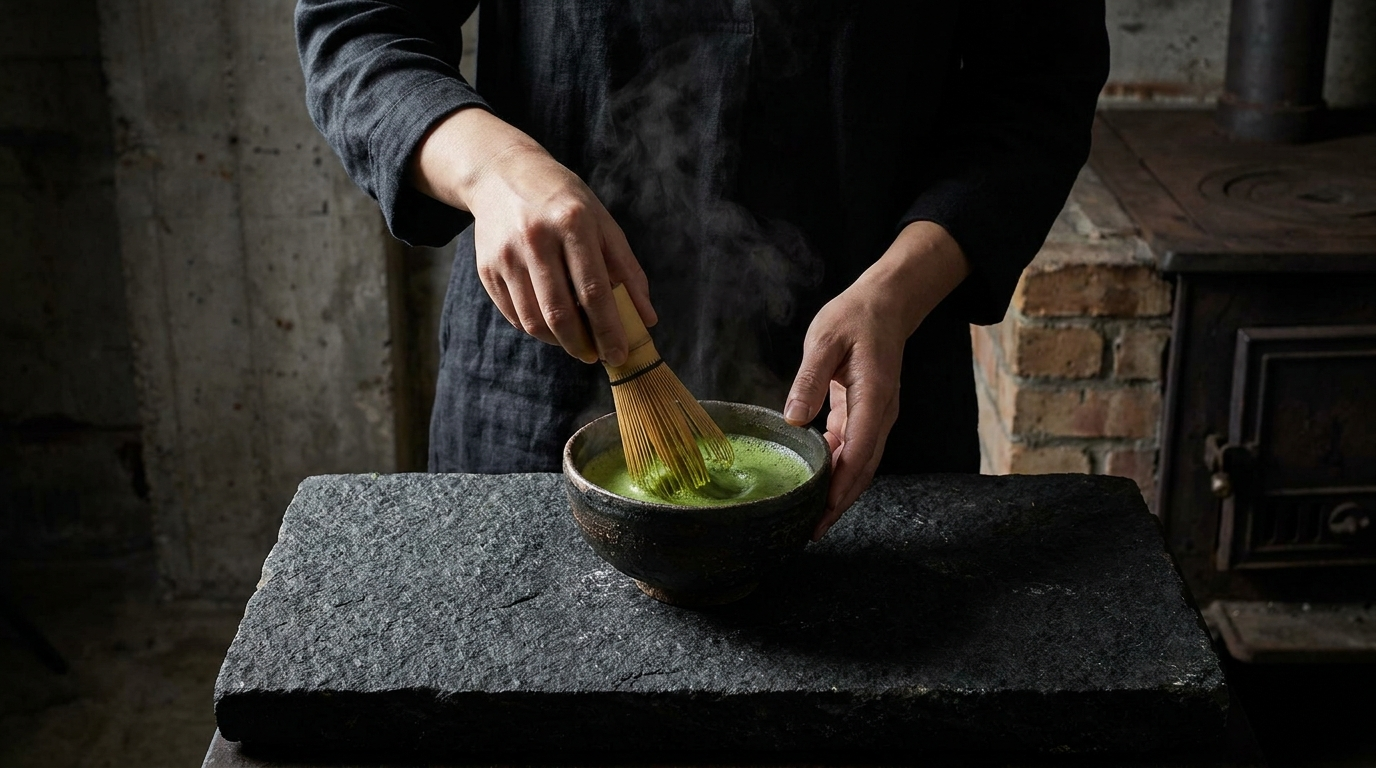
To prepare ceremonial matcha, whisk it as usucha: sifted powder, hot (not boiling) water, a quick whisk. Good ceremonial matcha is made to drink straight, so keep it simple.
- Sift 1 to 2 tsp of matcha into a bowl.
- Add ~2 oz hot water, about 175°F / 80°C, never boiling.
- Whisk 15 to 30 seconds in a W or M motion until smooth and frothy. Drink straight.
That is the whole method, no badge required. Judge matcha by origin, harvest, and cultivar, and the words "ceremonial grade" on the front stop mattering. The substance does the talking.
